

Master’s degree in lifelong learning in Intercultural Communication and Mediation in the Hispanic World

Timeline and timetable
September 2025 – June 2026 / Classes: Monday – Thursday (morning timetable)

Credits
60 ECTS (European credit transfer system)

Language
90% English – 10% Spanish

Cost
€4,950 + administrative fees (€70)
The Intercultural Communication and Mediation in the Hispanic World master’s degree aims to educate and train international students in the cultural, social, communicative and political-economic diversity of societies in Spanish-speaking countries. Ultimately, this master’s degree seeks to equip students with the skills needed to carry out a diverse range of projects — in areas such as business, media, education and public relations — in collaboration with stakeholders in the Hispanic world.
The programme is structured across two core pillars: intercultural communication, from a global and digital approach; and Hispanism, regarded as a cultural and economic axis encompassing approximately 600 million people worldwide.
Objetives

Objetive 1
Equip students with knowledge of the diverse realities that shape the “global Hispanic world,” enabling them to understand its unique traits when collaborating with stakeholders from these contexts.

Objetive 2
Train students in the fundamentals of intercultural communication through established academic concepts and theories, providing insight into the distinctive characteristics of interactions between global agents.

Objetive 3
Explore the structure and dynamics of media and social media environments in the Hispanic world as tools for shaping a unique global cultural identity.

Objetive 4
Analyse successful case studies involving global Hispanic stakeholders (businesses, cities, cultural agents, sports entities, etc.) to understand their defining characteristics and the favourable conditions for their expansion and consolidation.
Students
This master’s programme is designed for international students from areas outside the Spanish-speaking world, such as Asia, North America and Europe. Ideally, candidates will have experience in fields such as communication, cultural industries, mediation, international relations, business and languages. This course is aimed at those who wish to acquire specialised skills for managing and promoting cultural, economic, business and political projects and relationships with global stakeholders in the Hispanic world (both European and American).

Syllabus
1st-semester subjects (October – December / evaluation: January*)
- Barcelona: city branding and culture (6 ects)
- Intercultural communication for business and PR in the Hispanic world (6 ects)
- Spanish and Latino representations in media, cinema and music (6 ects)
- Topics and stereotypes on Hispanic world (6 ects)
- Communicative skills for spoken Spanish (6 ects)
*Students who can demonstrate a valid need to return to their home countries before January may complete assessments during the final teaching week in December.
2nd-semester subjects (February – May / evaluation: June)
- Media enterprises in the Hispanic world (6 ects)
- Social media, digital culture and Hispanic youth (6 ects)
- Entrepreneurship with Hispanic Partners (6 ects)
- Communicative skills for written Spanish (6 ects)
- Final thesis (6 ects)
Methodology and teaching staff
The master’s program employs a range of teaching methods, based primarily on in-person formats while occasionally incorporating remote formats. Some of the methods used are: Lectures, presentations, group discussions, working groups, case studies, problem solving, literature reviews, seminars, laboratory sessions, team learning, round tables, guest lectures and site visits. This list is not exhaustive and other methods may also be used.
Remote learning activities will be conducted via tools such as Moodle, e-learning platforms, webinars, virtual group tutorials and individual virtual tutoring.
Each course will provide a syllabus detailing the content, activities, timelines, references and evaluation methods.
The Final Master’s Thesis will involve either analysing a successful case study or carrying out a practical project aimed at promoting activities in Spanish-speaking contexts The thesis will be supervised by an academic tutor and subject to public presentation and evaluation.
The teaching team comprises esteemed academics from the University of Barcelona specialising in Hispanism, communication, international relations and other related fields. Guest speakers with relevant professional expertise will also contribute.
Location
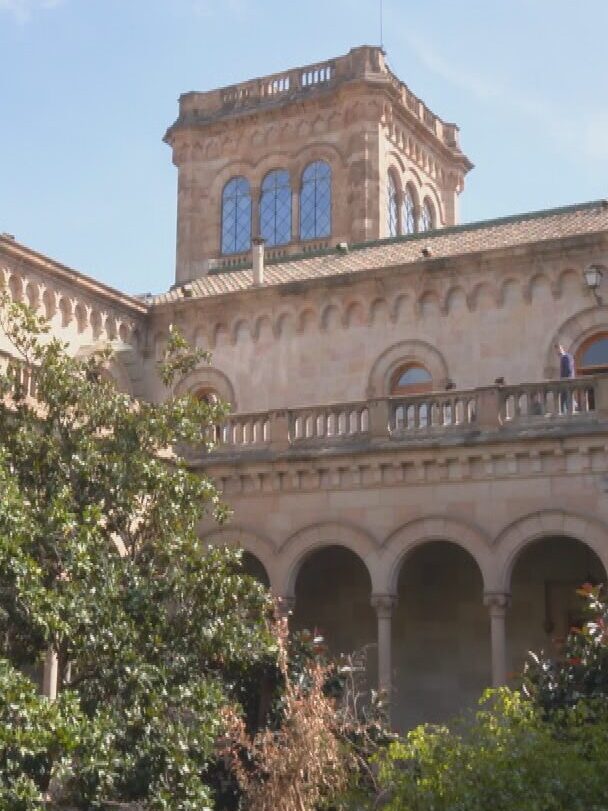
The master’s programme is based at the historic building of the University of Barcelona, constructed between 1863 and 1889. Located in the heart of the city centre, this majestic building was home to the majority of the city’s university faculties and schools for nearly a century. Its iconic Arts and Sciences courtyards served as hubs of knowledge and interaction, leaving an indelible mark on the city’s academic history.
It currently houses the Philology and Communication studies and boasts state-of-the-art facilities to support modern teaching practice. Students in the master’s programme will have access to study rooms, libraries, radio and television labs, audiovisual production rooms and audiovisual equipment loan services.

Contact
Faculty of Philology and Communication
- Email: master_ichw@ub.edu
- Location:
Gran Via de les Corts Catalanes, 585
08007 Barcelona